COP31: The Naforé Association gives a voice to wetlands, from the Sahel to the Gulf of Guinea
Posted in :

COP31: The Naforé Association gives a voice to wetlands, from the Sahel to the Gulf of Guinea
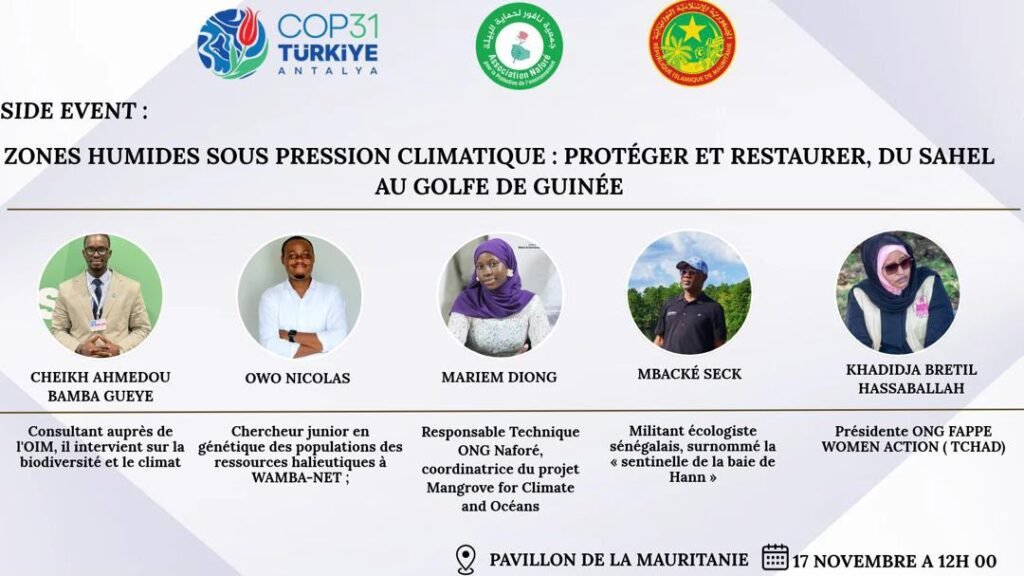
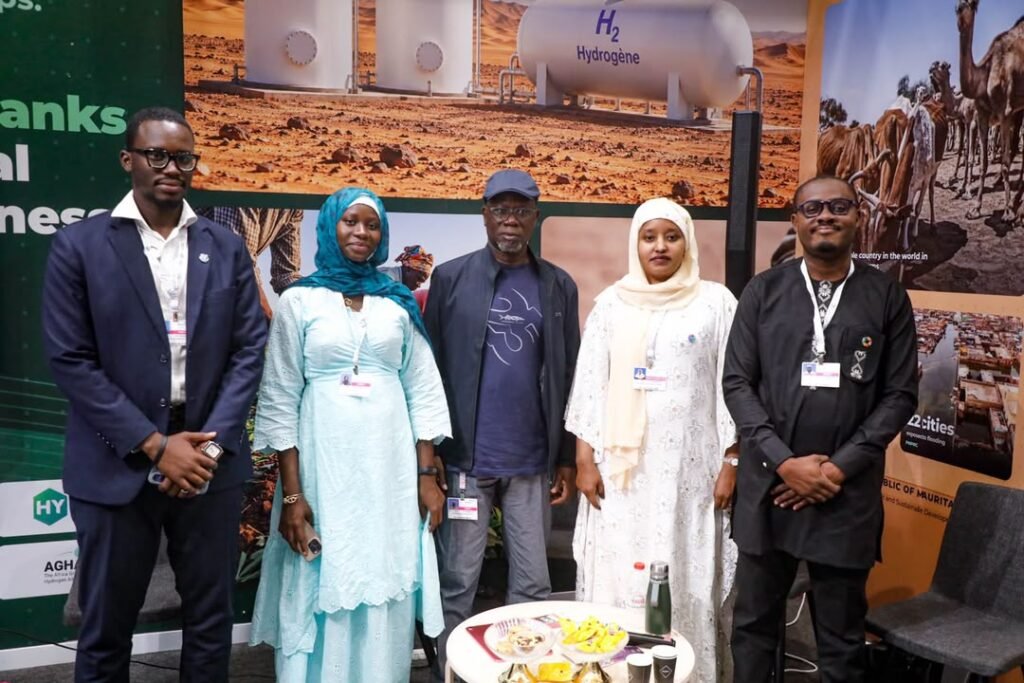
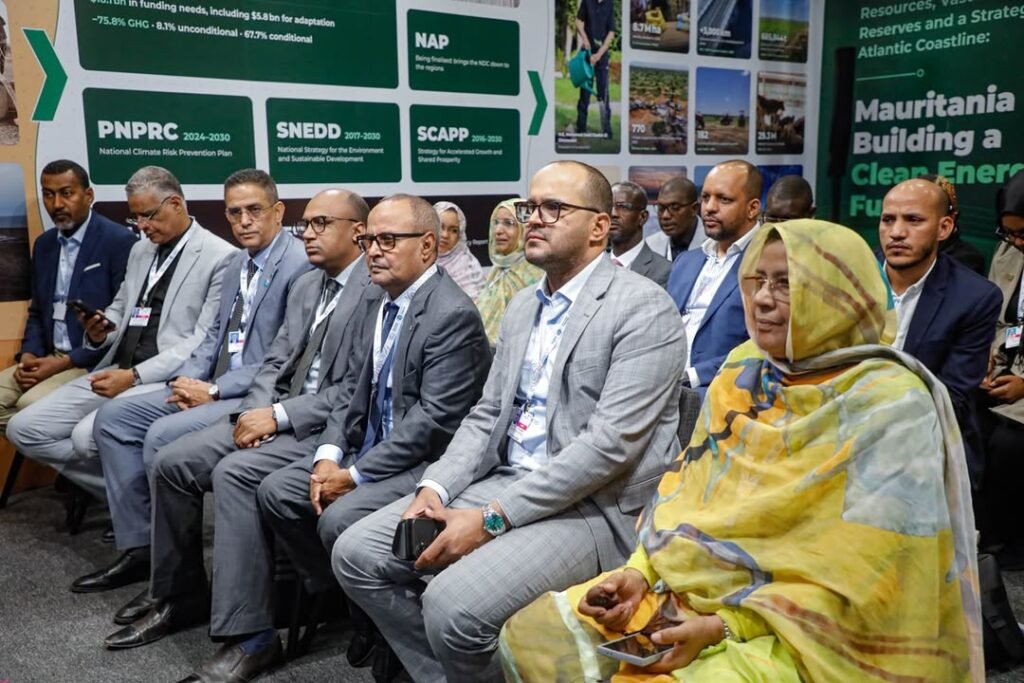
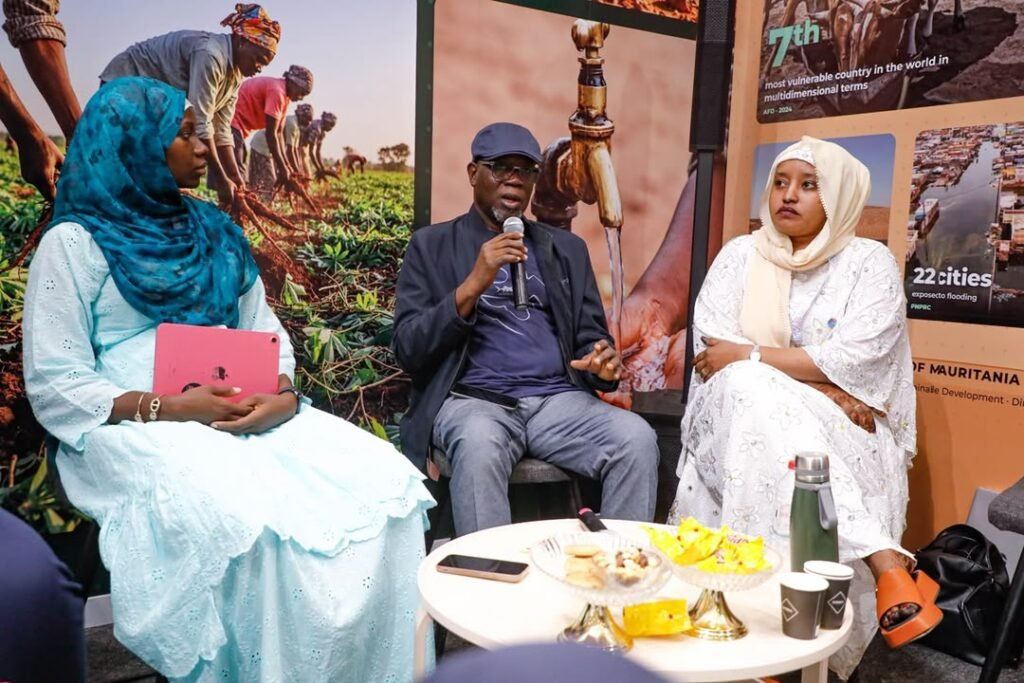
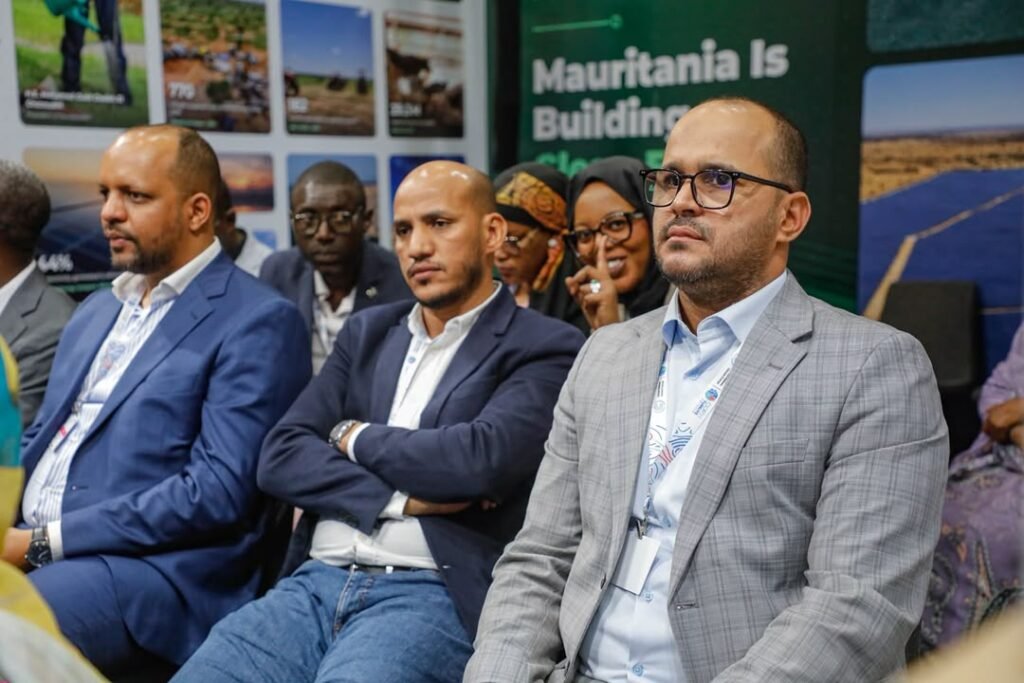
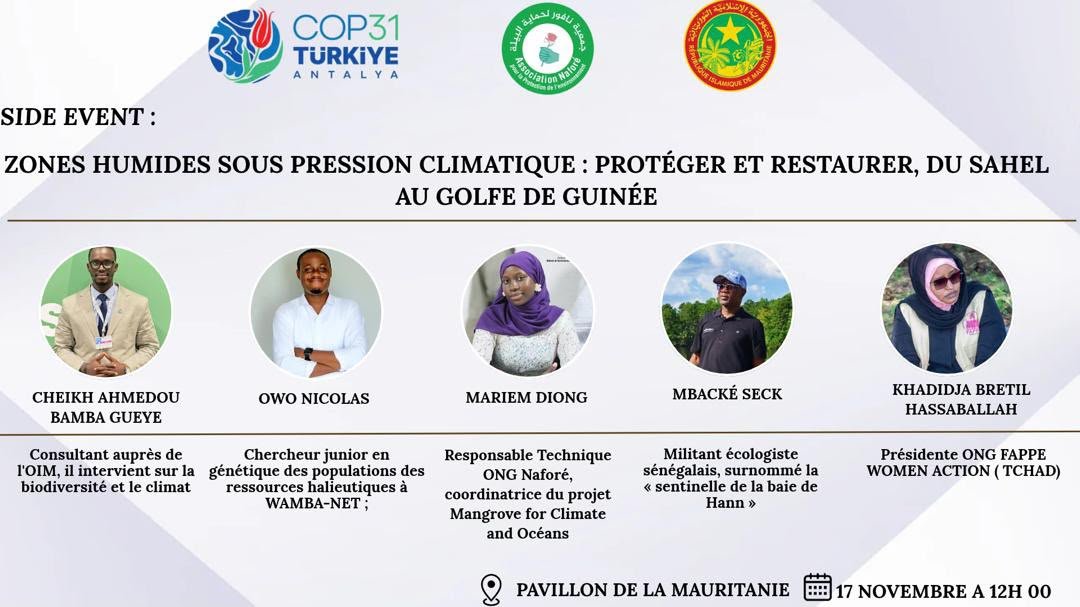
Antalya, November 17, 2026. At the heart of COP31, the Naforé Association for Environmental Protection brought together young field practitioners from four countries at the Mauritania pavilion for a side event titled “Wetlands Under Climate Pressure: Protecting and Restoring, from the Sahel to the Gulf of Guinea.” Organized in partnership with the Ministry of the Environment and Sustainable Development (MEDD), the event was part of the thematic day dedicated to “Oceans, Seas, Nature, and Land Use.”
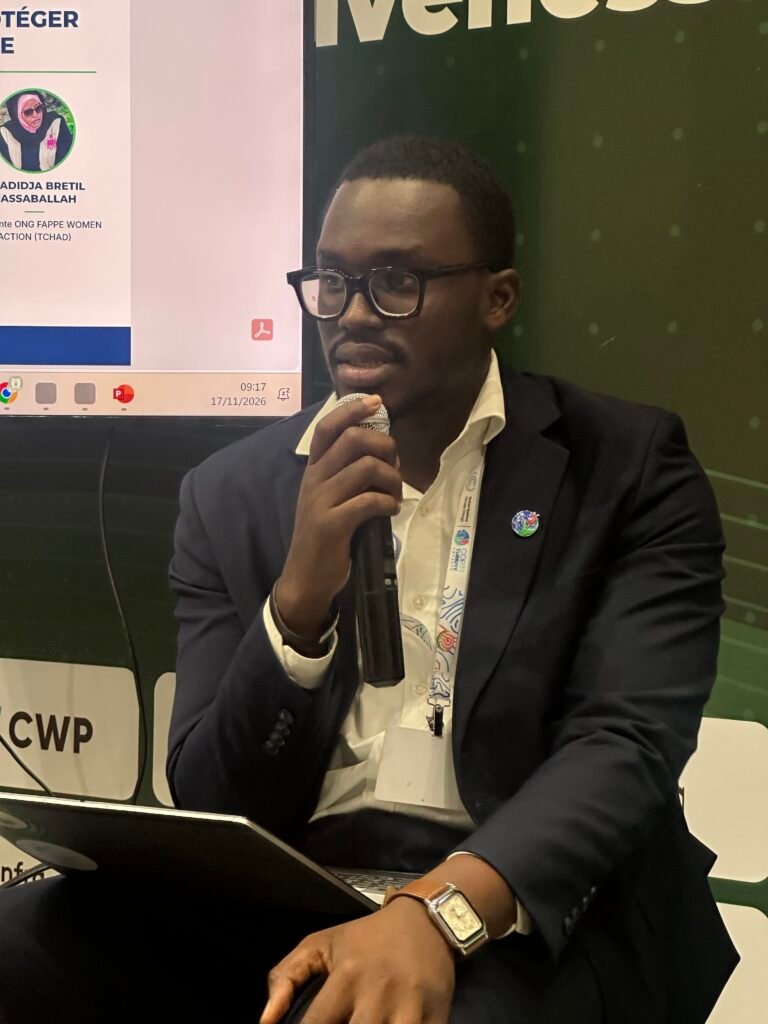
For one hour, the speakers shared their observations regarding the wetlands in their respective regions, the actions they are taking, and what they expect from policymakers. The panel was moderated by Cheikh Ahmedou Bamba Gueye, a consultant for the IOM and a member of the Naforé Association.
A single system, a shared pressure
From the Senegal River Delta to Lake Chad—encompassing the Inner Niger Delta and the lagoons of the Gulf of Guinea—the region’s wetlands form a unified ecosystem. They share the same migratory bird species and aquatic resources, and they sustain millions of people.
This ecosystem is in decline. In the north, droughts, reduced flood levels, and salinization are drying up ponds and deltas. In the south, rising sea levels and erosion are consuming the coastline. In Mauritania, the 5th National Communication projects a sea-level rise of approximately 19 cm by 2050.
Yet, these environments serve as our best defenses: they retain water during the dry season, absorb floodwaters, and act as a buffer against the sea. “Losing them means losing our first line of adaptation,” the Naforé Association emphasized. In the Lower Delta of Mauritania, the mangroves are regrowing
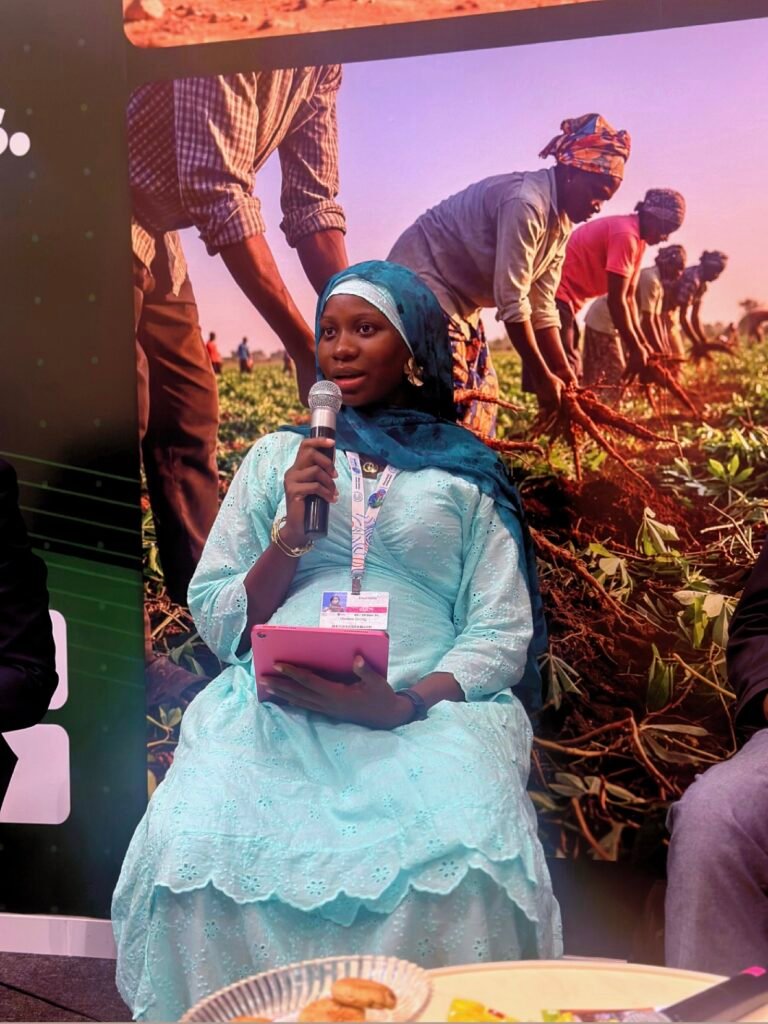
Mariem Diong, technical lead at the association Naforé and coordinator of the “Mangroves for Climate and Oceans” (MCO) project—funded by the PRCM—opened the panel by presenting an image: a branch of the Senegal River’s Lower Delta in Mauritania. A few years ago, this shoreline was bare, and the coastal dunes were encroaching. Today, the mangroves are regrowing there.
In collaboration with its partners (the Diawling National Park, the OMVS, and the WACA and WACA ResIP projects) as well as local riverside communities, Naforé has restored over 120 hectares of mangrove forest. With support from the PRCM—through the MCO program—the NGO has also developed income-generating activities to foster better mangrove conservation, including market gardening, the harvesting and processing of water lilies, the weaving of traditional mats from Sporobolus grass stems, and the introduction of beekeeping. These initiatives benefit more than 400 people, the majority of whom are women. “You cannot protect an ecosystem sustainably if the local inhabitants do not derive some benefit from it,” she emphasized. The mangroves are no longer viewed as a burden, but rather as a resource worth protecting.
Hann Bay: Citizen mobilization on the front lines
Mbacké Seck, a Senegalese environmental activist—often called the “sentinel of Hann Bay”—outlined the threats facing coastal communities: plastic pollution, erosion and the retreat of the coastline, the loss of sand from beaches, and the haphazard encroachment upon public maritime domain by hotels and homes built directly on the sand. In response to this, his organization mobilizes 80 volunteers every Saturday to clean up beaches, collect plastic bottles and packaging, and raise awareness among local residents—especially young people. As a result, some beaches that had been unusable for years have gradually become accessible once again.
However, he cautioned that these efforts remain insufficient without a stronger commitment from public authorities, including the implementation of sustainable waste collection systems, the effective enforcement of regulations in the public maritime domain, and financial support for community-based organizations.
Voices from the Sahel to the Gulf of Guinea
The panel also featured two other young stakeholders from the region:
Owo Nicolas (Côte d’Ivoire), a junior researcher in the population genetics of fisheries resources at WAMBA-NET, provided a perspective from the coastal wetlands of the Gulf of Guinea.
Khadidja Bretil Hassaballah (Chad), national coordinator of the NGO FAPPE Women Action, represented the inland wetlands of the Sahel.
Each speaker addressed three questions: what changes they have observed in their respective wetland areas, the actions they are taking and the results achieved, and what they would ask of donors if they had one minute to speak to them. A discussion with the audience followed.
Three lessons and a message for decision-makers
Three shared lessons emerged from these experiences:
Restoration is effective when communities act as participants rather than mere spectators.
A single initiative can serve multiple objectives simultaneously—addressing climate change, biodiversity, and land degradation—thereby aligning with the three Rio Conventions and the Ramsar Convention.
Local organizations and Young people can deliver these results, provided that funding reaches them directly.
The speakers also called for strengthened cooperation between local authorities, governments, and civil society, as well as the development of programs for restoring coastal ecosystems and combating erosion.
The Naforé Association extends its thanks to the MEDD, its partners, the speakers, and the members of the public who visited the Mauritania pavilion.